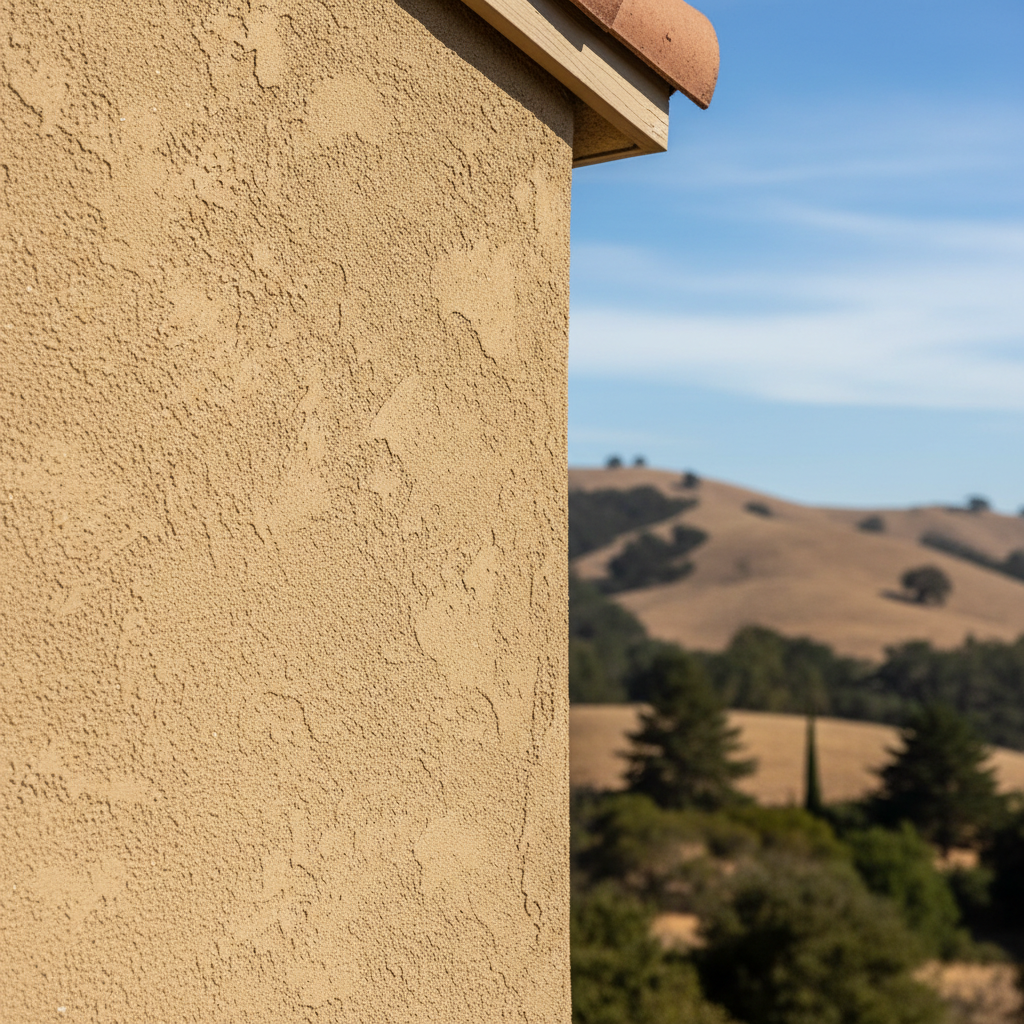
Salt air, heavy winter moisture rolling off Monterey Bay, and shifting coastal soils take a real toll on our houses here in Santa Cruz. If you live up in the redwoods where shade keeps things damp longer, or down by West Cliff where the marine layer sits heavy every morning, your exterior walls work hard year-round. Catching small problems early saves you from massive repair bills down the road. Here is how you can check your own stucco before calling in backup.
Before You Start Looking
Grab a notebook, a flashlight, and maybe a step stool. Do not go poking at your walls with heavy tools just yet. Walk the entire perimeter of your house on a dry day. You want to see what is going on behind the landscaping, especially where garden beds or ivy touch the base of the wall. Moisture loves to hide behind overgrown shrubs.
What You Can Check Yourself
You do not need a moisture meter or a contractor's license to spot the obvious red flags. Look closely around windows, doors, and where your roofline meets the siding. Here is what you can handle on a Saturday morning:
- Hairline cracks that look like a spiderweb.
- Discoloration or dark stains running down from window sills.
- Plants growing too close to or right against the plaster.
- Dirt splashing up from bare soil during our heavy winter storms.
If you see a crack, take a pencil and hold it next to the opening. If it is narrower than a credit card, it is usually a standard shrinkage crack. Anything wider means something is moving.
When to Put Down the Flashlight and Call a Pro
There is a big difference between cosmetic cracking and structural failure. If you spot bulges, soft spots that yield when you press them gently, or white crusty deposits called efflorescence leaching through the finish, stop right there. That white powder means water is moving through your wall and dissolving the salts inside the cement. Santa Cruz Stucco & Plastering sees this all the time near the coast where wind-driven rain forces moisture right past compromised sealants.
You also need an expert if you find cracks wider than an eighth of an inch, or multiple diagonal cracks radiating out from the corners of your window frames. Those patterns usually indicate that the lath behind the stucco is rusting or the framing has settled. Trying to patch those with a tube of hardware store caulk is just putting a temporary fix on a larger issue.
After the Inspection
Once you finish your walkthrough, make a map of any trouble spots. Minor hairline cracks can often be sealed with an elastomeric coating during a routine refresh, but deeper issues require professional intervention to strip back the damaged plaster, check the weather barrier, and rebuild the layers properly. Keep an eye on those marked areas every few months, especially after our first big atmospheric river hits town. Staying proactive keeps your home solid for decades.