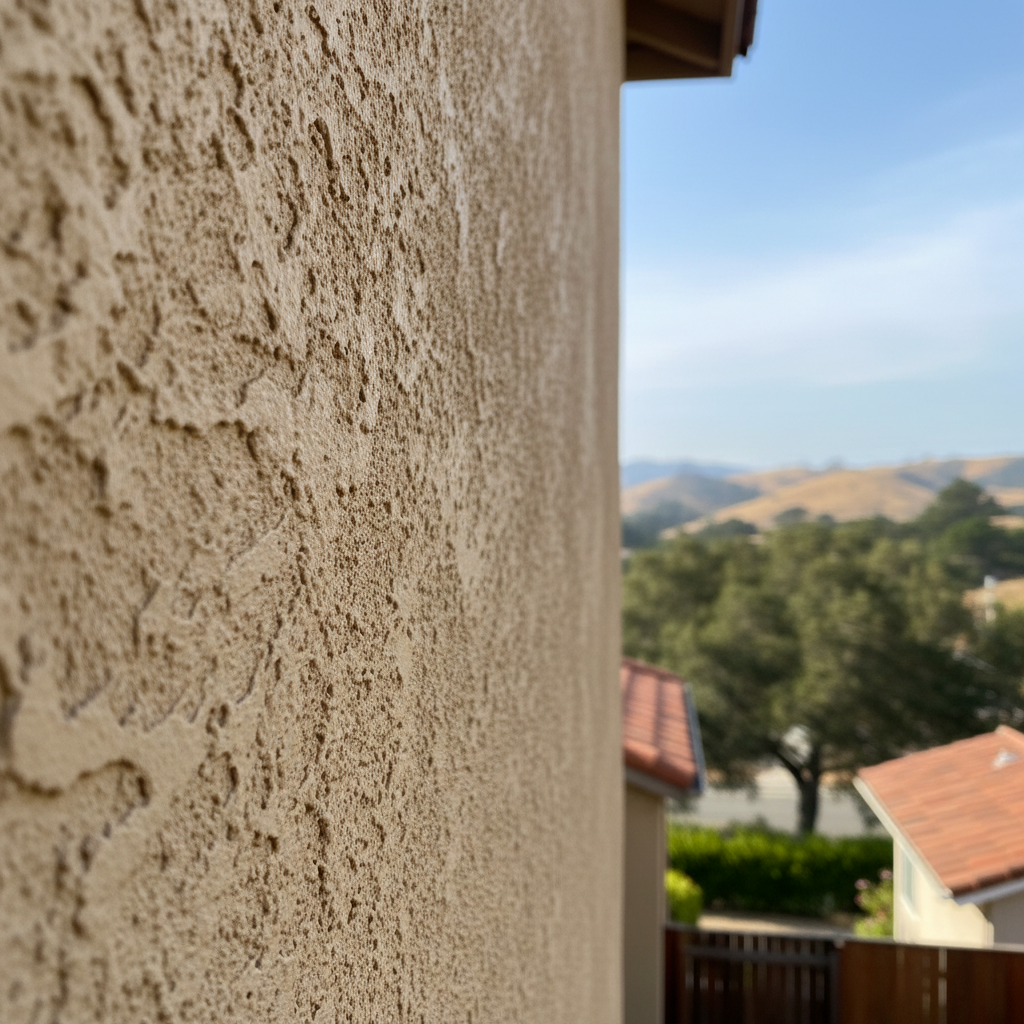
Hairline cracks running along exterior walls often raise questions about whether the movement is normal settling or a deeper issue. Living on the coast in Santa Cruz, CA means houses take a constant beating from salt air, morning fog, and damp winters. Property owners from the Westside up to the Santa Cruz mountains must stay on top of stucco condition because exterior maintenance protects framing from rot.
This practical guide covers how to walk a property, what homeowners can safely check, and when it is time to bring in professional support.
Before You Start: What to Look For
Homeowners do not need a cart full of expensive contractor tools to complete a basic walkaround. A notepad, a flashlight, and a coin or a credit card to gauge crack widths are all that is required. Pick a dry afternoon when the sun hits the walls at an angle, which makes shadows pop and highlights surface irregularities.
- Walk the perimeter of the house and look closely around window corners and door frames where stress naturally concentrates.
- Check the clearance between the bottom of the stucco and the soil or concrete flatwork, making sure to maintain at least a couple of inches of clearance to prevent moisture wicking.
- Keep an eye out for any white, powdery residue called efflorescence, which tells you water is moving through the walls and bringing salts out to the surface.
Doing the Walkthrough: DIY vs. Pro Territory
Visual inspections can be easily handled by property owners. Stroll around and map out where cracking, discoloration, or bulging areas appear. If a crack is thinner than a credit card, that is typically cosmetic shrinkage that can be monitored or sealed with a bit of elastomeric patch.
However, once cracks get wider than a nickel, or if the stucco sounds hollow when gently tapped with the handle of a screwdriver, potential delamination is present. That means the outer layer has lost its bond to the lath underneath. Moisture loves to sneak into those pockets, especially during heavy winter storms off Monterey Bay.
If rust stains bleed through the finish coat, that is a dead giveaway that the internal metal lath is rusting out from trapped moisture. That is not a weekend DIY fix. That is the moment to call Santa Cruz Stucco & Plastering to open up the wall and see how deep the water intrusion goes.
After the Inspection: Making Your Game Plan
Once the walk is complete, categorize what was found. Clean out any dirt or spider webs from minor cracks to see them clearly. If vegetation touches the exterior walls, such as ivy or overgrown shrubs trapping coastal moisture against the plaster, trim those back immediately. Letting the walls breathe is half the battle in the local climate.
If everything looks tight and dry, the condition is stable. Make it a habit to check things over twice a year, especially right after the heavy rainy season wraps up in spring. If deep cracks, soft spots, or widespread damage are found, do not wait for the next atmospheric river to deal with it. Catching small moisture issues early keeps walls solid and prevents a massive repair bill down the road.