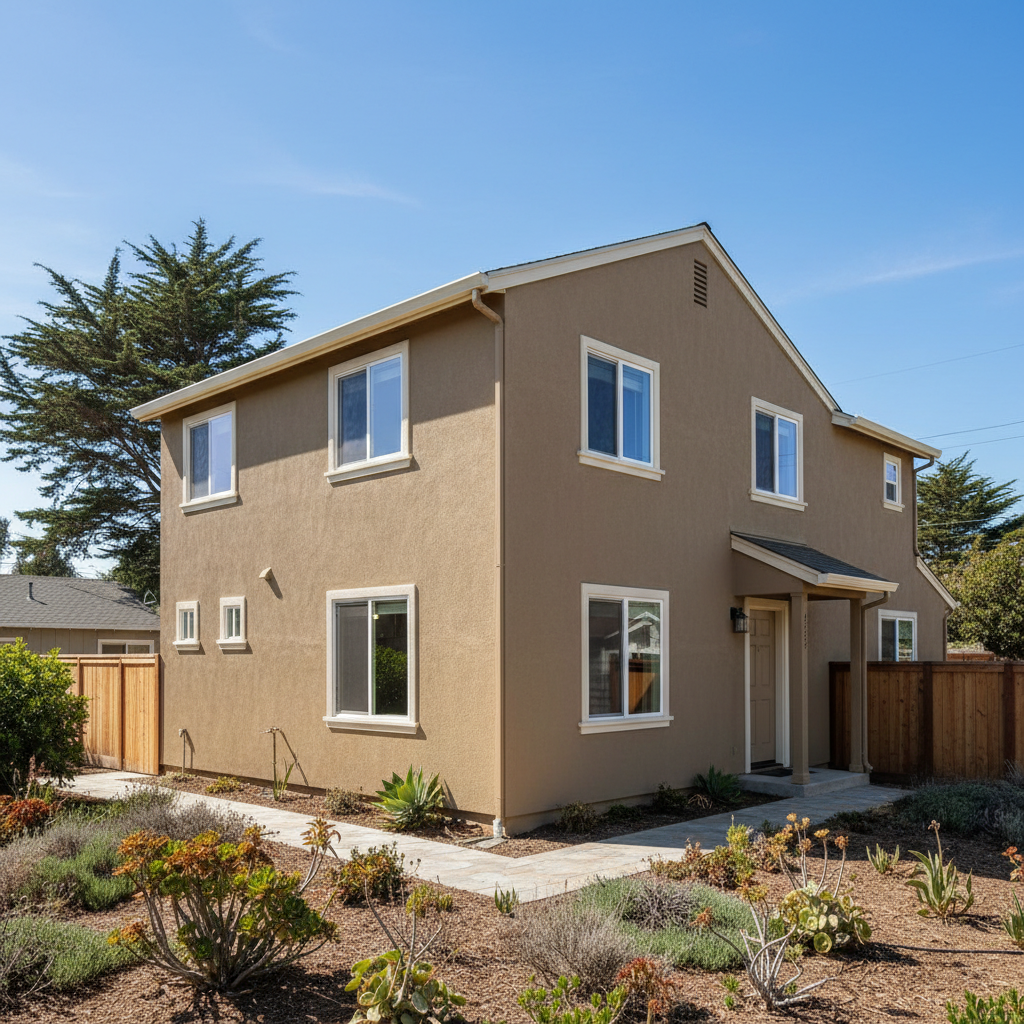
Alright, let's talk EIFS – that's Exterior Insulation and Finish Systems. You might know it better as synthetic stucco. It's a really good product for insulation and gives a super clean finish, but like anything else, folks always want to know what it's going to cost. And here in Santa Cruz, prices can jump around a bit, depending on a few things. I've been doing this for a while now, and I've seen enough projects to give you a pretty solid idea of what to expect.
What Makes EIFS Prices Go Up or Down?
It's never just one thing, is it? When I'm putting together a quote for EIFS, I'm looking at several factors that really push the numbers. You should too, so there are no surprises down the road.
- The System Type: There are different EIFS systems out there. Some are drainage systems, which are designed to let any moisture that gets behind the EIFS escape. These usually cost more, but they offer much better protection against water getting in — which, let's be honest, is a big deal with our coastal fog and those occasional heavy rains we get here in Santa Cruz. Barrier systems, on the other hand, rely on the EIFS itself to be the main moisture barrier. They're often a bit cheaper upfront, but they can be riskier if not installed absolutely perfectly. I almost always recommend a drainage system for residential work around here, just to be safe.
- Square Footage: This one's pretty obvious. More wall space means we need more material and more labor. Simple as that.
- Complexity of the Job: Is your house a plain old box, or does it have lots of architectural details – bump-outs, arches, columns, intricate window trims? Every corner, every angle, every decorative element adds time and requires specialized labor, which, of course, means more cost. It's way faster to apply EIFS to a flat, uninterrupted wall than to one with a dozen small windows and fancy trim bands.
- Condition of the Existing Walls: What are we putting the EIFS over? If it's new construction with clean sheathing, that's straightforward. But if we're going over old siding that needs to be taken off, or if there's existing damage that needs repair (like the dry rot we often see in older homes near the beach), that's extra work and materials.
- Insulation Thickness: EIFS comes with different thicknesses of insulation board. A thicker board gives you a better R-value, meaning better energy efficiency for your home, but it also costs more for the material itself.
- Finish Type and Color: The final topcoat comes in various textures and colors. Some specialized textures or custom color matching can add a little bit to the material cost.
- Accessibility: Can we easily get equipment to all sides of your house? Are we working on a steep hillside up in the Santa Cruz Mountains, or is it a flat lot in Live Oak? Scaffolding, lifts, and extra safety measures for hard-to-reach spots all factor into the labor cost.
Typical Cost Ranges in Santa Cruz
Okay, let's get down to some actual numbers. For EIFS installation here in Santa Cruz, you're generally looking at a range of $10 to $20 per square foot. That's a pretty wide range, I know, but it really boils down to those factors I just mentioned.
- For a fairly straightforward, simple house with good access, using a standard drainage EIFS system, you might be closer to the $10-$14 per square foot mark.
- If you've got a more complex design, thicker insulation, or challenging access, you could easily hit $15-$20 per square foot.
These numbers include both materials and labor for a complete system. So, for a 2,000 square foot house with, let's say, 1,500 square feet of exterior wall surface, you could be looking at anywhere from $15,000 to $30,000. It's a significant investment, no doubt, but the energy savings and improved curb appeal can really pay off.
What's Included in a Quote?
When Santa Cruz Stucco & Plastering gives you a quote – or any reputable contractor, for that matter – it should be pretty detailed. You definitely want to see:
- Preparation: This covers things like cleaning the existing walls, masking off windows and doors, and maybe even removing old siding if that's part of the job.
- Materials: A breakdown of all the EIFS components – adhesive, insulation board (with the thickness specified), base coat, mesh, primer, and the finish coat (texture and color).
- Labor: The cost for the crew to install everything.
- Flashing and Sealants: These are absolutely crucial for water management around windows, doors, and any penetrations. Don't ever skimp here.
- Scaffolding/Equipment Rental: If we need it for access.
- Cleanup and Debris Removal: What happens to all the waste? It should be hauled away, not left for you.
- Warranty Information: Both for the materials and for the labor.
Make sure it's all spelled out clearly. If a quote just says